Sprinkler start-up problems are common when irrigation systems are turned on for the first time after winter. Months of freezing temperatures, soil movement, and debris buildup can affect pipes, valves, sprinkler heads, and irrigation controllers. When systems are reactivated in the spring, homeowners and property managers may notice pressure issues, leaks, misaligned sprinkler heads, or zones that fail to operate correctly.
Understanding the most common sprinkler start-up problems helps identify issues early, improve watering efficiency, and prevent costly irrigation repairs.
Common Sprinkler Start-Up Problems and How to Fix Them
Water Pressure Issues at Start Up
Water pressure problems represent one of the most common sprinkler start-up problems in residential and commercial irrigation systems. When pressure is too high or too low, sprinklers may not distribute the correct amounts of water across landscaped areas.
Low pressure can occur when valves remain partially closed or when pipes contain debris. Reduced pressure may also indicate a water leak in the irrigation line or along a connected water line. Uneven spray patterns, weak sprinkler heads, and inconsistent coverage are typical signs of developing pressure issues.
High pressure can also create sprinkler start-up problems by damaging components or causing misting instead of proper watering. Excess pressure may lead to broken sprinkler heads or loosened fittings. Installing or adjusting a pressure regulator often restores proper system performance.
Damaged or Misaligned Sprinkler Heads
Physical damage and misalignment frequently cause sprinkler start-up problems during the first system activation of the season. Lawn maintenance equipment, soil movement, or winter freezing conditions can shift or break sprinkler heads. Common signs of sprinkler head issues include:
- Water spraying in the wrong direction
- Uneven coverage across lawn areas
- Visible cracks or missing nozzle pieces
- Water pooling around a sprinkler head
A quick inspection usually identifies the source of the problem. Broken heads can be replaced with matching models, while misaligned heads may require repositioning to restore proper spray patterns.
Regular inspection during seasonal activation prevents sprinkler start-up problems from affecting watering efficiency. Correct alignment ensures that irrigation water reaches intended areas rather than sidewalks or driveways.
Valve and Controller Malfunctions
Valves and irrigation controllers regulate water flow and scheduling within the system. When these components fail, sprinkler start-up problems may appear immediately after seasonal activation.
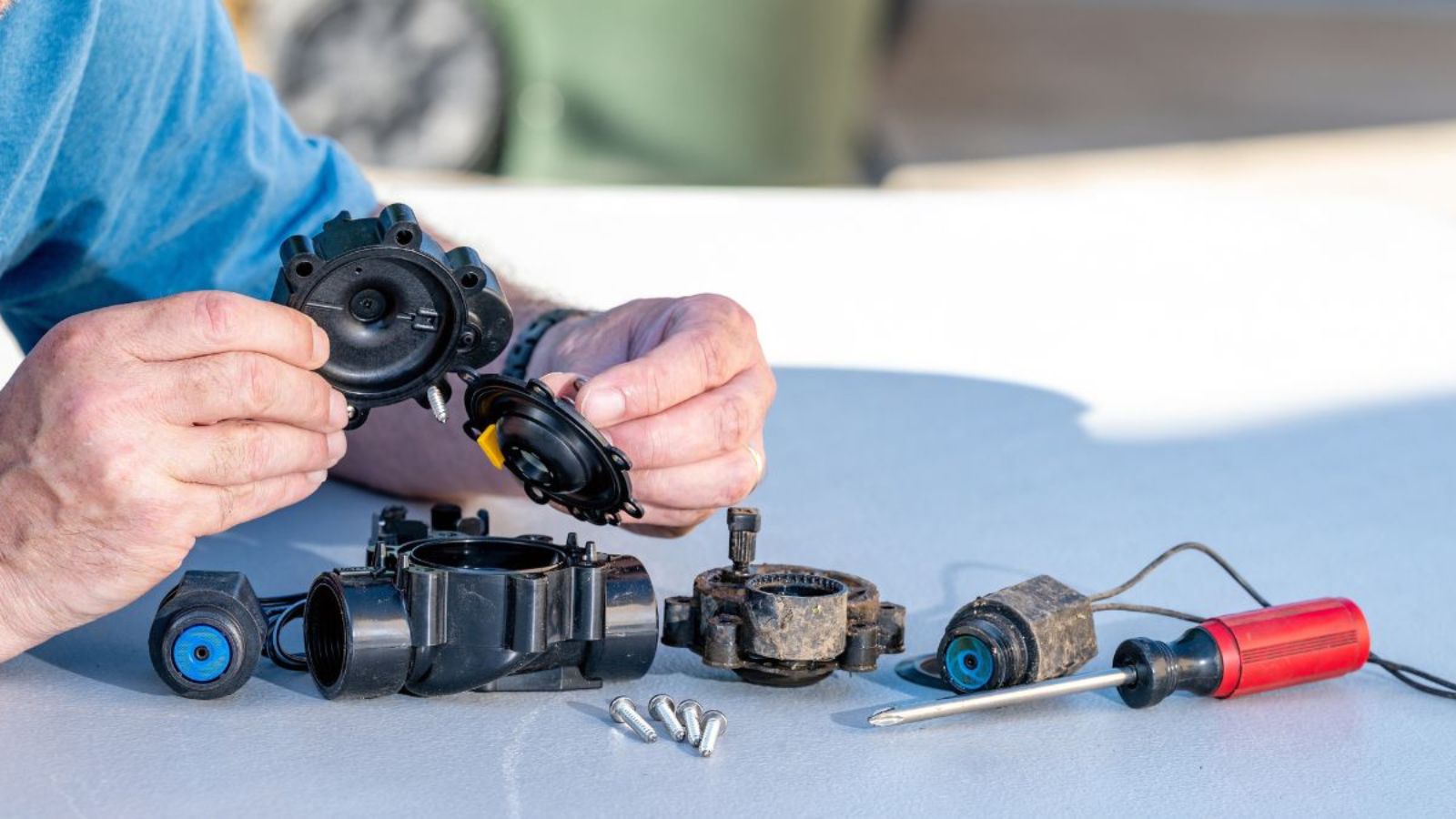
Valve issues often occur when dirt or debris blocks internal components. This blockage may prevent valves from opening fully or closing correctly. As a result, some sprinkler zones may fail to activate while others remain running longer than expected.
Controller settings may also contribute to sprinkler start-up problems. Power interruptions during the winter months can reset timers or irrigation schedules connected to automated watering systems. Checking programming, verifying zone settings, and confirming electrical connections often restores proper system operation.
Leaks and Pipe Damage
Leaks represent another frequent source of sprinkler start-up problems after winter conditions. Frozen ground and temperature changes may create small cracks or loosen fittings within underground irrigation lines. The table below outlines common leak indicators and possible causes.
| Symptom | Possible Cause | Suggested Action |
|---|---|---|
| Water pooling near the sprinkler | Broken head or loose fitting | Inspect and tighten or replace parts |
| Sudden pressure loss | Underground pipe leak | Inspect lines and repair the damaged section |
| Constant water flow | Valve stuck open | Clean or replace the faulty valve |
| Wet soil between sprinklers | Pipe crack or connection issue | Locate the leak and repair the pipe |
Early leak detection prevents additional sprinkler start-up problems related to pressure loss or soil erosion. Addressing leaks quickly also reduces water waste and protects nearby landscaping features connected to wastewater treatment systems.
Regular seasonal inspections make it easier to identify pipe damage before watering schedules begin. Monitoring water usage and observing lawn conditions helps confirm that the irrigation system operates efficiently over the long term.
Clogged Nozzles and Debris Buildup
Clogged nozzles are another source of sprinkler start-up problems after systems remain inactive during colder months. Dirt, sand, and small particles can accumulate in sprinkler heads and restrict water flow.
These blockages often result in uneven spray patterns or reduced coverage across lawn areas. In some cases, water may spray in a narrow stream instead of the intended fan pattern.
Routine cleaning can prevent these sprinkler start-up problems from affecting irrigation performance. Removing the nozzle and rinsing it with clean water usually restores normal spray patterns. Filters inside sprinkler heads may also require cleaning to maintain consistent water distribution.
Electrical and Wiring Problems
Electrical faults occasionally cause sprinkler start-up problems when irrigation systems rely on automated controllers and valve wiring. Damaged wires or loose connections may prevent certain zones from activating.
Signs of electrical issues include zones that fail to turn on or sprinkler cycles that stop unexpectedly. These issues can occur when wires deteriorate underground or when connectors become exposed to moisture.
Basic troubleshooting can identify many sprinkler start-up problems related to wiring. Inspecting visible connections and testing zone activation from the controller often reveals the source of the malfunction. In more complex cases, professional inspection may be required to locate damaged wires.
Pioneer Underground Lawn Sprinklers | Sprinkler System Repairs and Maintenance Omaha, NE
Contact Pioneer Underground Lawn Sprinklers to schedule a free estimate on a system install or to find out what you can do to make your existing system more efficient. We welcome commercial and residential clients. And remember, whether you need our services now… or later in the season, Your Healthy Lawn is Our Passion, and we are only a phone call away.