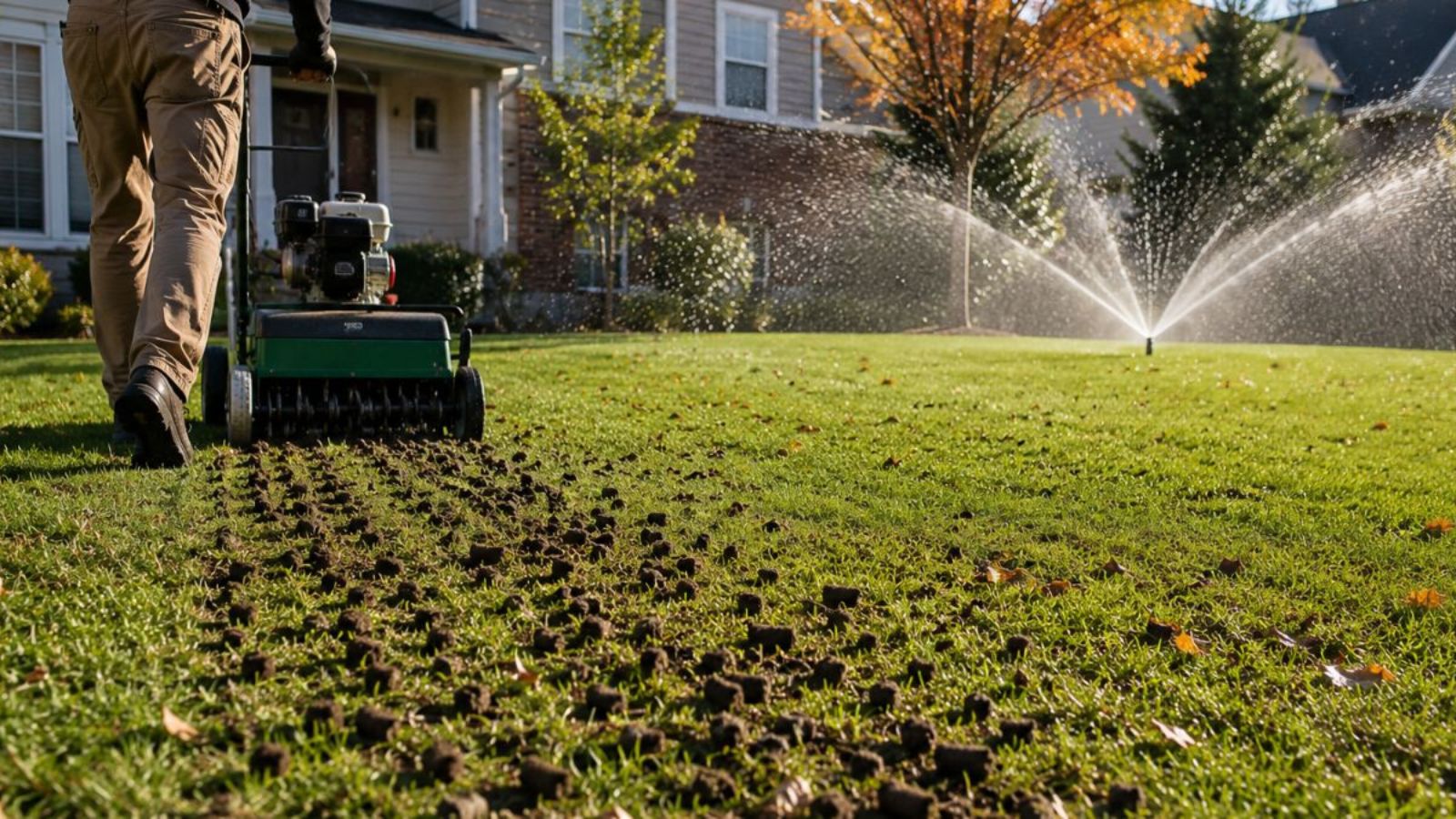
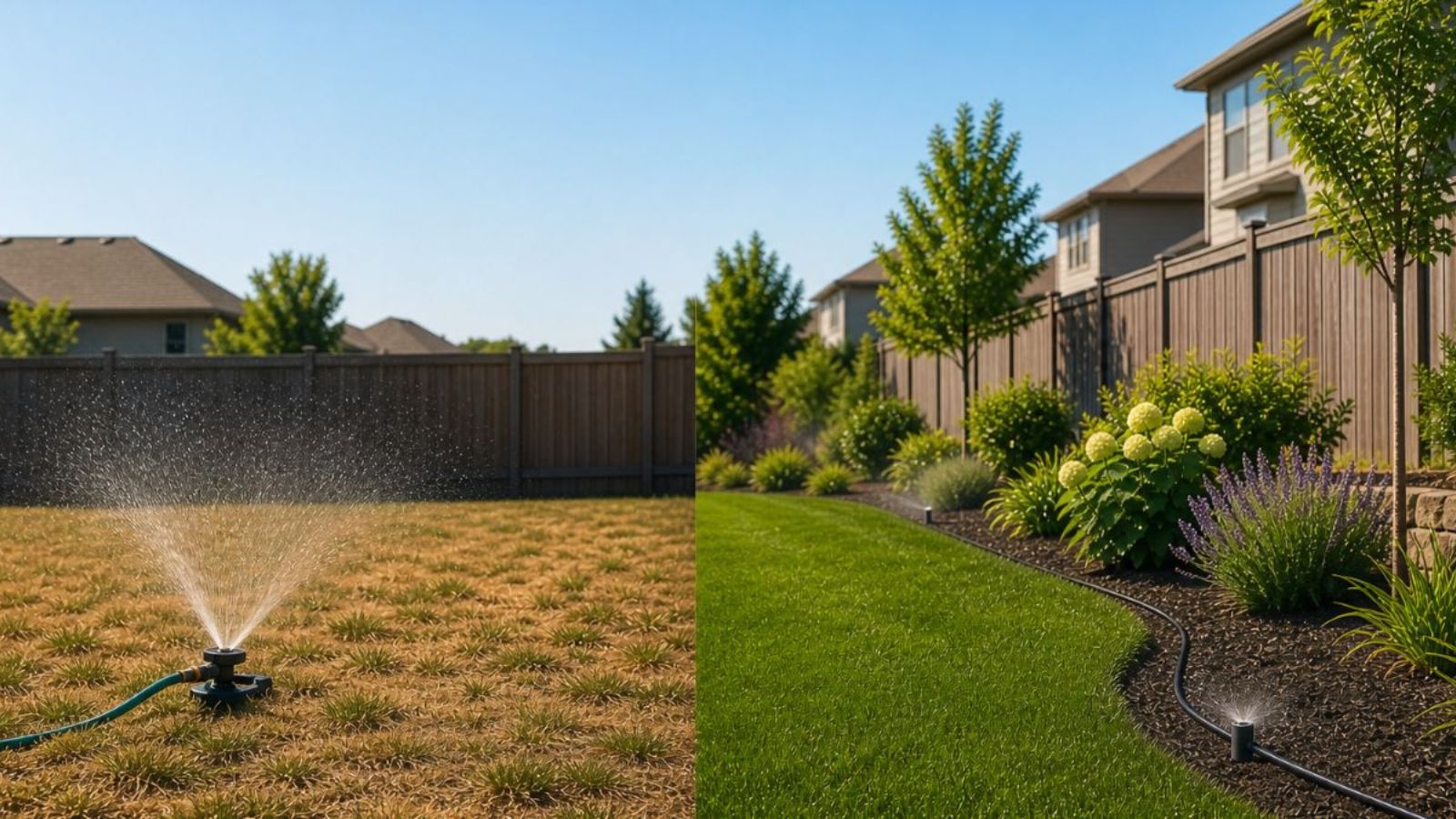
Every fall, we start seeing a familiar pattern after aeration and overseeding projects. The lawn work is complete, but the sprinkler system is often still operating under summer conditions that no longer match what new seed requires.
In many cases, the irrigation system is running correctly. The issue is that the watering approach has not been adjusted for a lawn that is recovering from aeration and establishing new grass.
Most fall irrigation problems are not caused by major equipment failures. They usually come from small differences in coverage, timing, or programming that become more noticeable when new seed depends on consistent moisture.
Fall Conditions Change Irrigation Needs
Aeration and overseeding create a temporary change in how the lawn uses water.
Aeration opens compacted soil, allowing moisture and oxygen to move more easily into the root zone. Overseeding introduces grass seed that depends on moisture near the surface before roots begin developing.
This creates different irrigation needs than an established lawn.
During fall inspections, it is common to find soil that remains moist deeper down while the surface has already dried. Mature turf can often tolerate that difference. Newly seeded areas usually cannot. Common irrigation adjustments after overseeding include:
- Shorter watering cycles
- More frequent irrigation during germination
- Reduced watering frequency as seedlings develop
- Controller adjustments as temperatures change
The goal is not simply adding more water. It is maintaining consistent moisture where the seed is beginning to establish.
Using a Sprinkler System After Overseeding
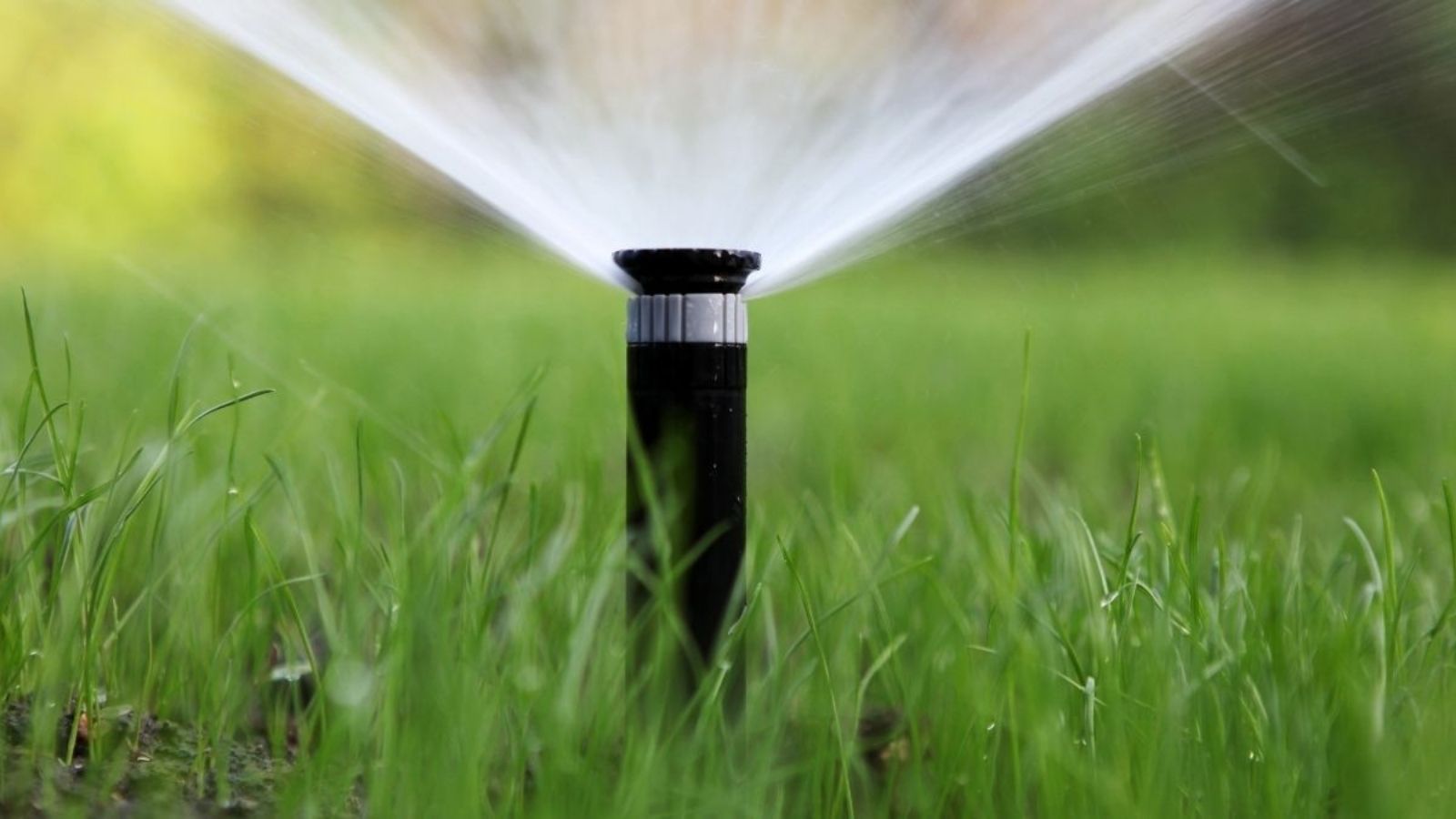
A sprinkler system after overseeding needs to deliver water more precisely than during normal lawn maintenance.
A common mistake is increasing the runtime on every zone after noticing thin areas. This can create another problem by making already wet sections oversaturated while dry areas continue receiving inadequate coverage.
In practice, irrigation adjustments usually focus on how water is applied rather than how much total water is added.
Shorter cycles allow water to absorb gradually instead of running off compacted areas or washing seed toward lower sections of the lawn.
As seedlings mature, watering can slowly transition back toward deeper cycles that encourage stronger root development.
Aeration Can Reveal Soil And Coverage Differences
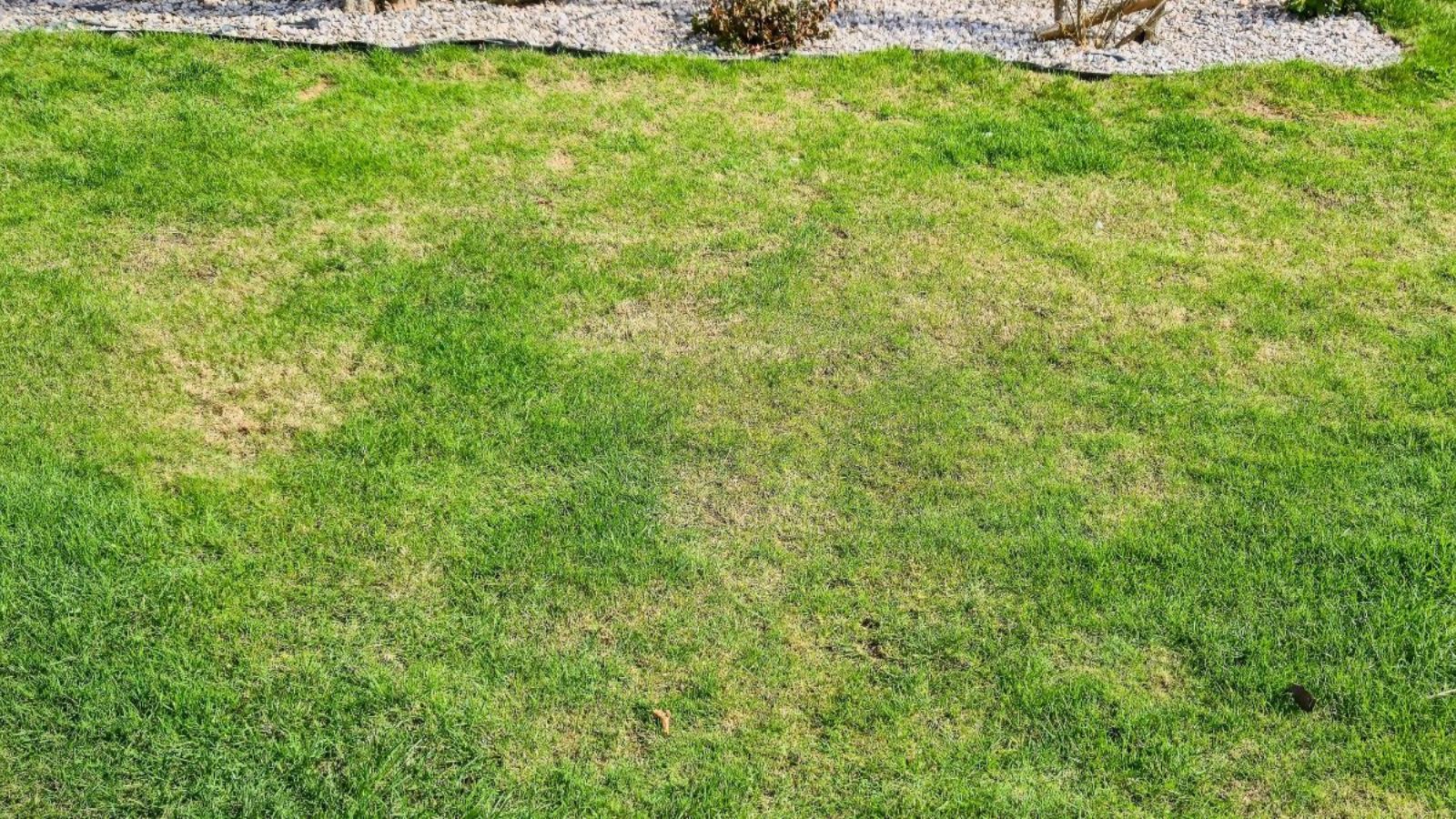
Aeration often exposes lawn conditions that were previously difficult to notice. When soil cores are removed, water movement changes temporarily. Areas with better soil structure may absorb irrigation differently than compacted sections that still resist moisture penetration. This is why some lawns show uneven establishment even when the sprinkler system appears to be working. Common patterns include:
- Water collecting in compacted areas
- Dry sections appearing between sprinkler arcs
- Sloped areas losing moisture faster
- Newly seeded spots developing at different rates
Soil conditions and irrigation coverage often cause these differences rather than the seed itself. The interaction between soil conditions and irrigation coverage often determines how evenly new grass develops.
Sprinkler Coverage Issues Become More Visible
Overseeding frequently reveals sprinkler problems that established grass has hidden.
A mature lawn can sometimes tolerate minor coverage gaps because existing roots continue accessing moisture. New seedlings are less forgiving.
During fall checks, common findings include:
- Sprinkler heads shifted from mowing activity
- Spray patterns no longer overlapping correctly
- Heads sitting too low after soil changes
- Dry strips between coverage areas
Spray zones and rotor zones can also require different adjustments after overseeding because they apply water at different rates. A schedule that works for one zone type may create inconsistent moisture when used for another.
These issues are often subtle. A sprinkler head may only be slightly out of alignment, but that small change can create noticeable differences after several irrigation cycles.
Correcting coverage is usually more effective than simply increasing watering time.
Controller Settings Often Need Seasonal Changes
Many fall irrigation issues are related to programming rather than equipment.
Controllers are often adjusted during spring startup and summer heat, then left unchanged when lawn conditions begin shifting. What we commonly find includes:
- Summer runtimes continuing into cooler weather
- Multiple programs watering the same zones
- Seasonal adjustments not being updated
- Rain settings affecting scheduled cycles
A controller can appear normal on the screen while still creating inefficient watering patterns.
Reviewing the complete program setup is important because individual zone settings may look correct while overlapping schedules create unintended results.
Small Equipment Problems Can Affect Germination
Newly seeded lawns often make minor sprinkler issues easier to identify.
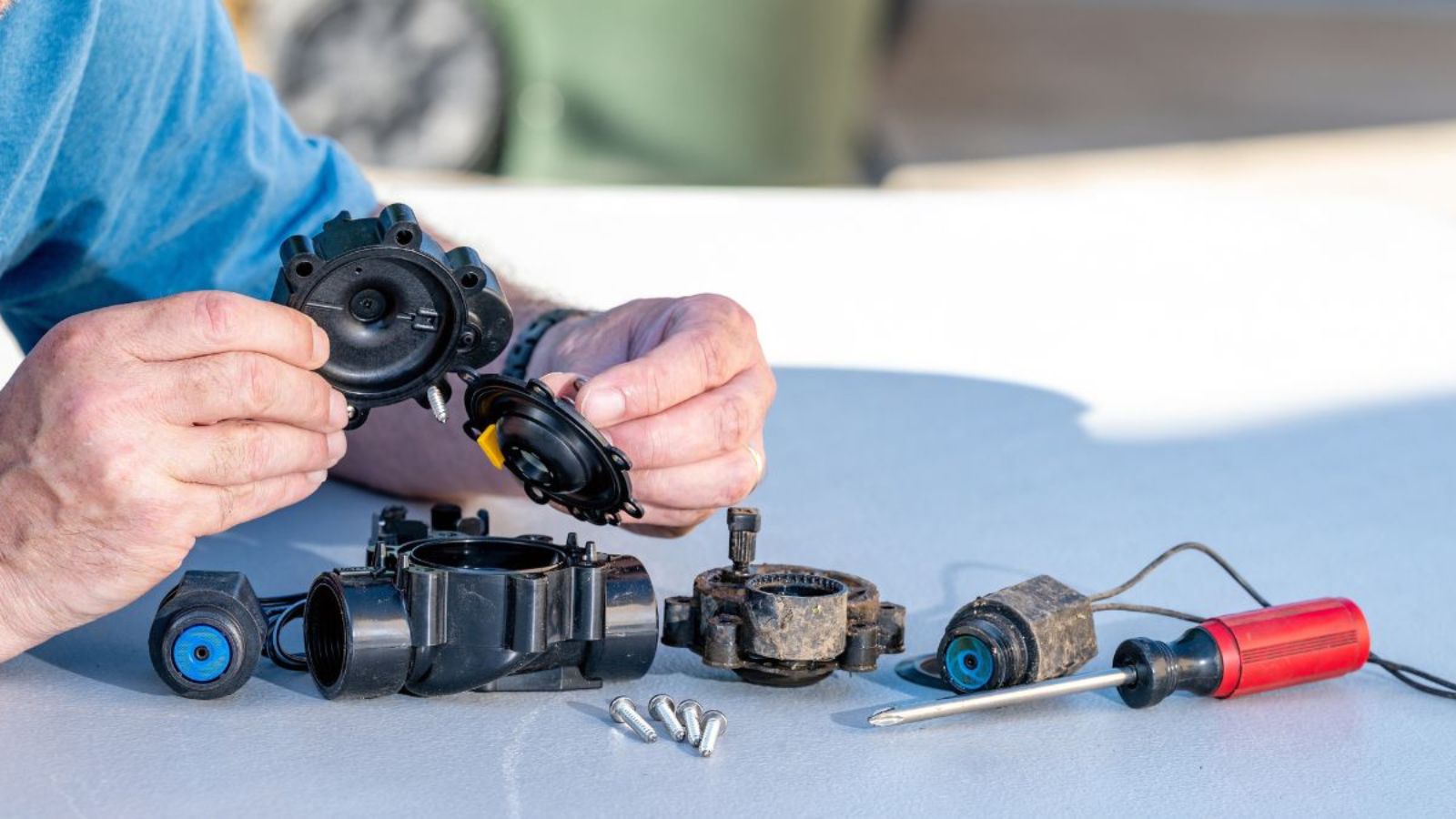
A partially clogged nozzle or slightly damaged sprinkler head may not create obvious problems during summer. After overseeding, those same issues can leave sections without enough moisture during a critical growth period. Common problems include:
- Reduced spray distance
- Uneven nozzle patterns
- Heads producing mist instead of proper coverage
- Weak performance in one section of a zone
These issues are especially noticeable when one area of the lawn develops slower than surrounding sections despite receiving the same scheduled watering.
Checking individual sprinkler performance helps determine whether the problem involves irrigation delivery rather than watering frequency.
Avoid Fixing Dry Spots With More Water
Thin areas after overseeding often lead homeowners to increase irrigation times immediately.
That approach does not always solve the problem.
If a dry area is caused by poor sprinkler overlap, adding more runtime may only increase water usage in areas that were already receiving enough coverage. A better approach is identifying whether the issue involves:
- Water distribution
- Sprinkler alignment
- Soil conditions
- Controller settings
- Equipment performance
Finding the cause first prevents unnecessary adjustments that may create new problems elsewhere.
Knowing When To Return To Normal Watering
The first few weeks after overseeding require the most attention, but irrigation needs continue changing throughout fall. Once seedlings are established and begin developing stronger roots, watering frequency can gradually decrease. Signs that a lawn may be ready for a schedule transition include:
- Consistent grass growth across seeded areas
- Stronger root development
- Less dependence on frequent surface moisture
Continuing a germination schedule too long can encourage shallow rooting, while reducing irrigation too quickly can stress developing grass. The transition period is where many lawns benefit from observation rather than following a fixed calendar.
Help New Grass Establish Before Winter
A sprinkler system after overseeding works best when irrigation adjustments follow the needs of developing grass rather than continuing summer watering habits.
In many fall inspections, the system itself is still functional. The difference comes from correcting small coverage issues, updating controller settings, and adjusting watering patterns as the lawn moves through different growth stages.
When irrigation supports the conditions created by aeration and overseeding, new grass has a better opportunity to establish evenly before winter arrives.
Frequently Asked Questions
How often should a sprinkler system run after overseeding?
Newly seeded areas typically need more frequent watering during germination to maintain surface moisture. As grass becomes established, irrigation can gradually shift toward longer and less frequent cycles.
Should sprinkler schedules change after fall overseeding?
Yes. Summer irrigation schedules are designed for established turf during higher temperatures. Fall overseeding usually requires shorter cycles and more frequent watering at first.
Why does my sprinkler system create dry spots after overseeding?
Dry spots often appear when sprinkler coverage is uneven due to shifted heads, clogged nozzles, poor overlap, or differences between zone types. Checking water distribution can help identify the cause.
Can aeration affect sprinkler performance?
Aeration does not usually damage sprinkler systems, but it can reveal differences in soil absorption and lawn conditions that make existing coverage problems easier to notice.
When should normal sprinkler settings return after overseeding?
Once new grass is established and no longer depends on frequent surface moisture, irrigation can gradually return to a deeper watering schedule that supports mature turf.
Pioneer Underground Lawn Sprinklers | Sprinkler System Repairs and Maintenance Omaha, NE
Contact Pioneer Underground Lawn Sprinklers to schedule a free estimate on a system install or to find out what you can do to make your existing system more efficient. We welcome commercial and residential clients. And remember, whether you need our services now… or later in the season, Your Healthy Lawn is Our Passion, and we are only a phone call away.