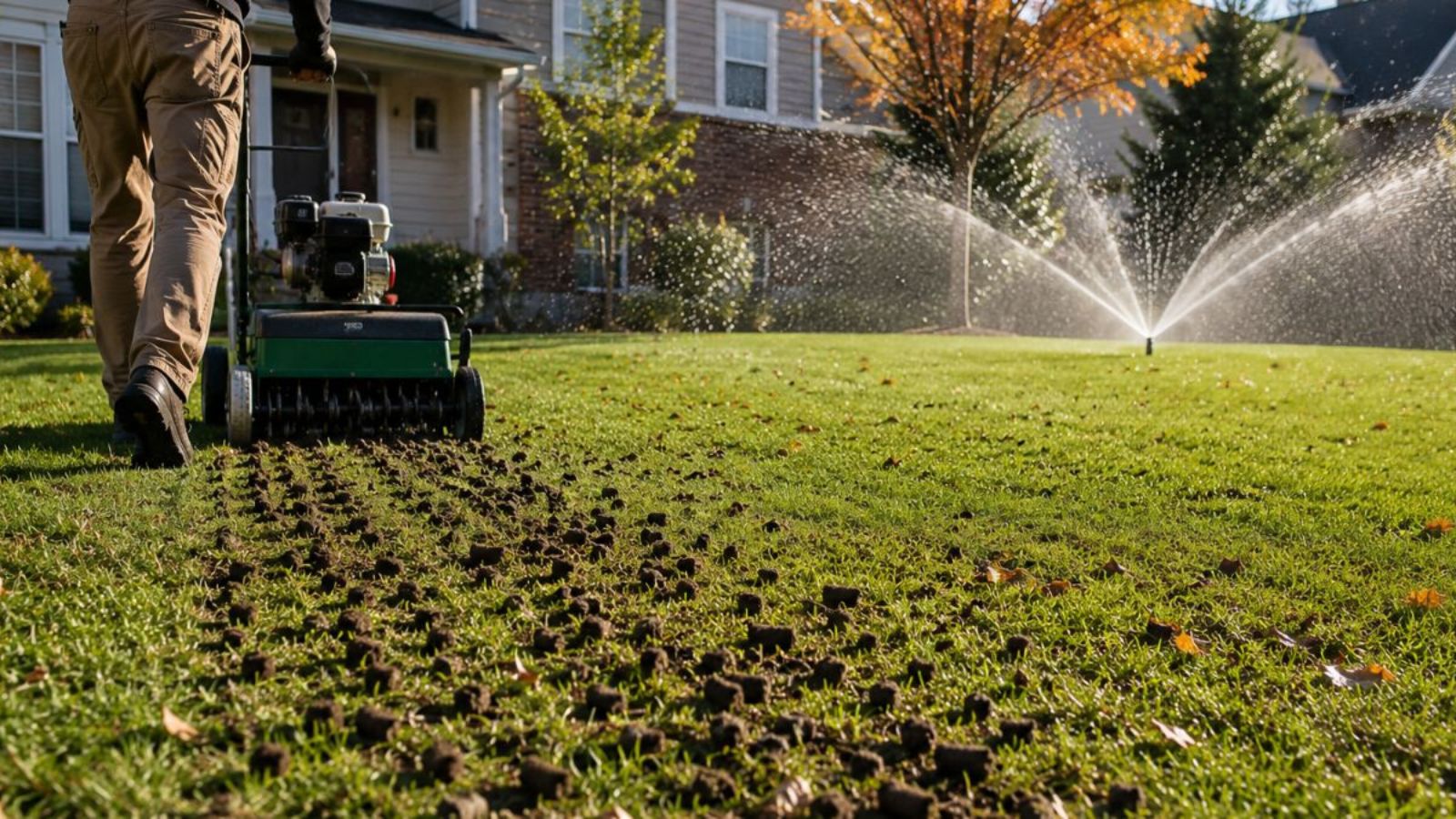
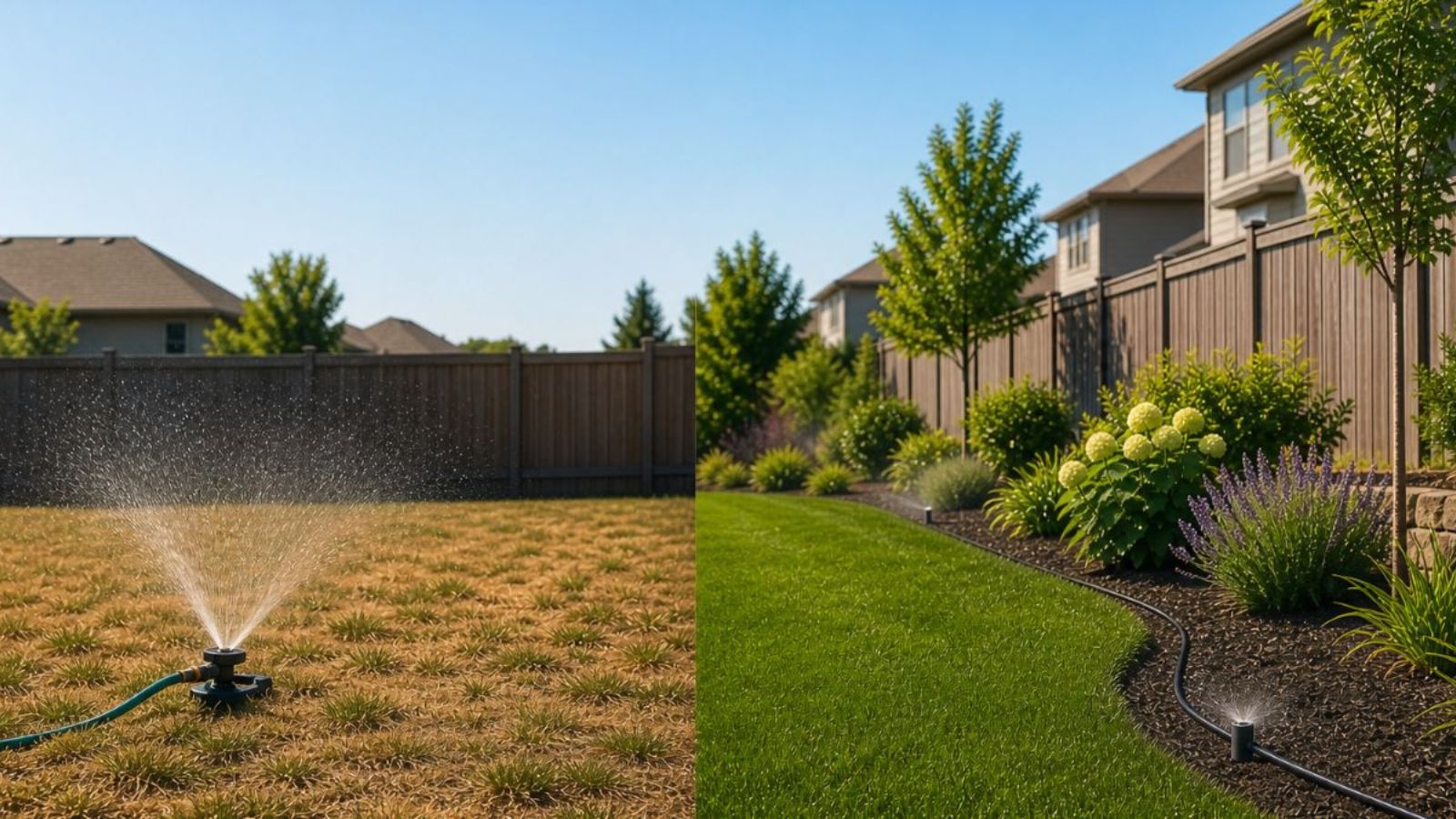
Every fall, the same irrigation pattern appears after aeration and overseeding projects. The lawn work is complete, but the sprinkler system is often still operating under summer conditions that no longer match what new grass seed requires.
New seed needs consistent moisture near the soil surface while it germinates. Established grass has deeper roots and can handle longer periods between watering. Using the same schedule for both can leave new seed too dry or keep other areas unnecessarily wet.
In practice, successful watering of new grass seed after overseeding means providing frequent moisture during germination, then gradually reducing watering frequency as the grass develops.
Watering Frequency After Overseeding
Newly overseeded areas commonly need light watering once or more during the day while the seed is germinating. The actual frequency depends on how quickly the soil surface dries.
There is no universal sprinkler runtime that works for every lawn. Spray heads and rotors can apply water at different rates, while soil conditions, slope, temperature, wind, and rainfall also affect moisture levels.
During germination, common adjustments include:
- Shorter watering cycles
- More frequent irrigation
- Monitoring the soil surface
- Reducing irrigation when rainfall provides sufficient moisture
A common mistake is using a long summer cycle because the lawn looks dry. That can create runoff, move seed, or leave some sections saturated.
The goal is consistent moisture near the seed without keeping the soil constantly wet. Check the seeded surface between cycles, particularly in areas exposed to sun or wind. If it repeatedly dries before the next cycle, watering frequency may need adjustment.
Sprinkler Coverage After Overseeding
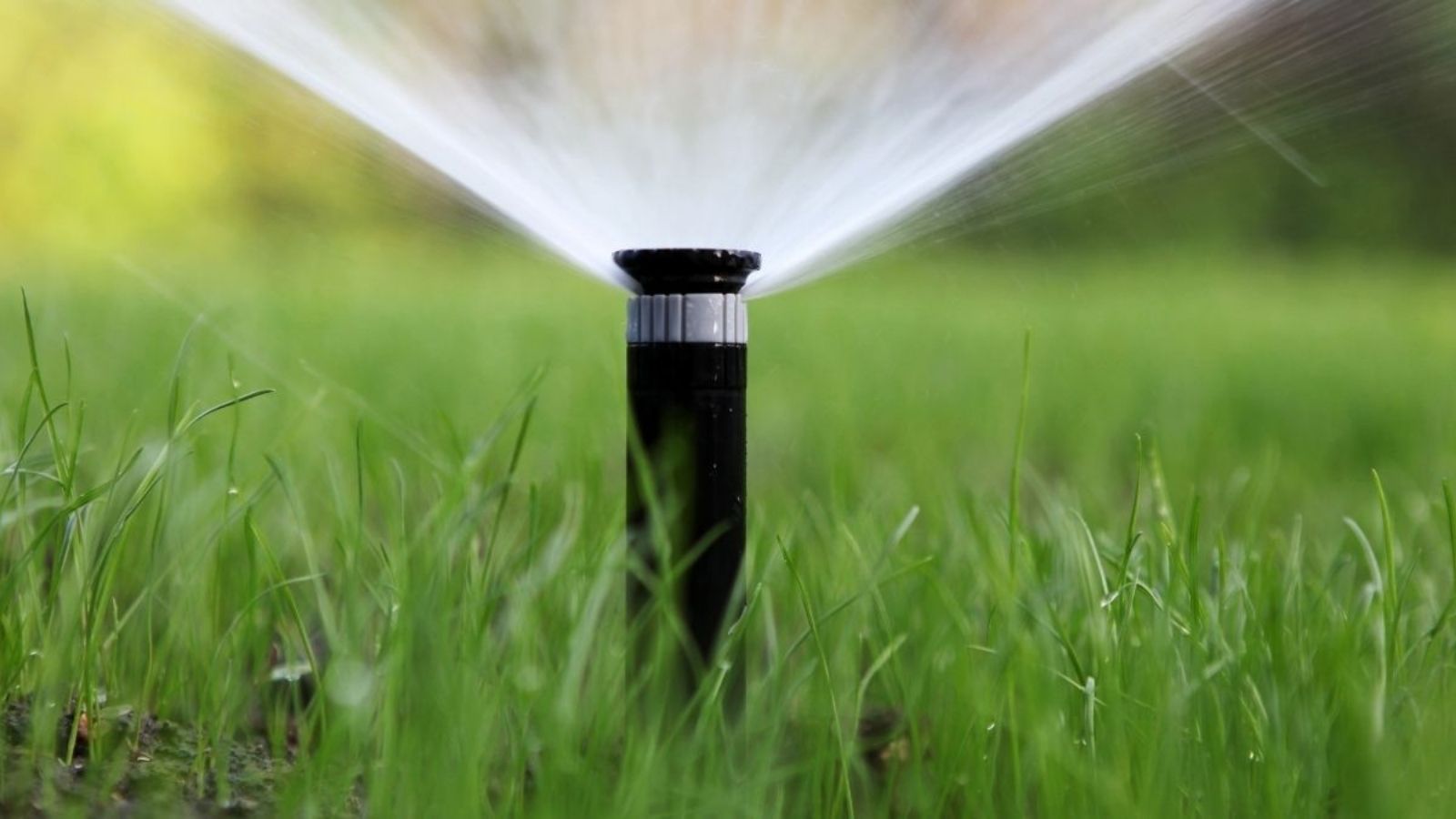
Overseeding often makes minor sprinkler coverage problems easier to see. Established grass can sometimes tolerate small dry areas because its roots are already developed. New seedlings have less ability to compensate for inconsistent watering. Common coverage problems include:
- Sprinkler heads shifted out of position
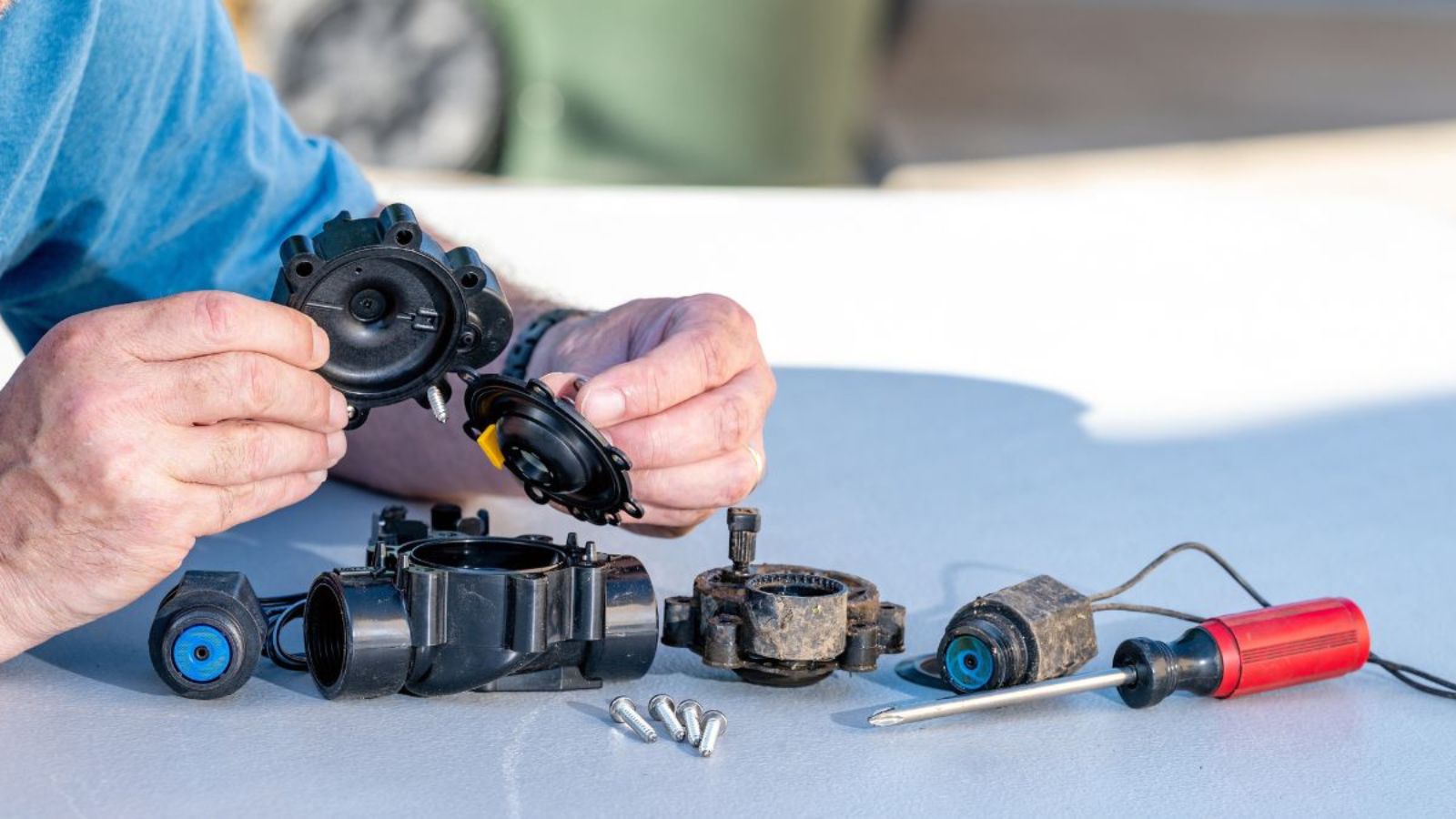
- Clogged or partially blocked nozzles
- Dry strips between sprinkler patterns
- Heads sitting too low
- Spray reaching sidewalks instead of the lawn
A small change in spray direction can leave part of a newly seeded area without enough moisture. A partially clogged nozzle or damaged head may also appear functional while delivering less water than surrounding heads.
If one section repeatedly grows more slowly, increasing the entire zone’s runtime may not solve the problem. Checking individual sprinkler performance can determine whether the issue involves watering frequency or water distribution.
Adding more water to a zone with poor coverage can oversaturate areas that already receive enough irrigation while leaving the dry section unchanged.
Soil Conditions And Water Movement
Aeration changes how water enters the soil, but every part of a lawn may not absorb water at the same rate.
Compacted sections can still resist infiltration, while slopes may lose surface moisture as water moves downhill. These differences can create uneven establishment even when the sprinkler system operates normally.
Common patterns include:
- Water collecting in compacted sections
- Dry areas developing on slopes
- Seed moving toward lower areas after heavy irrigation
- Some sections germinating faster than others
A lawn can receive the same programmed watering while different areas experience different moisture conditions. When growth is uneven, checking both soil conditions and irrigation coverage provides a better starting point than simply adding more water.
Reducing Watering Frequency
The watering schedule should change as seedlings become established.
Early watering keeps moisture available near the surface. As seedlings develop roots, irrigation can gradually become less frequent while still providing moisture deeper in the soil.
| Grass Stage | Watering Focus | Irrigation Approach |
|---|---|---|
| Germination | Keep the seedbed moist | Short, frequent cycles |
| Early seedling growth | Support developing roots | Gradually reduce frequency |
| Established new grass | Encourage deeper roots | Longer, less frequent cycles |
The transition should be gradual. Reducing watering too quickly can dry out developing seedlings, while maintaining frequent surface watering for too long can limit deeper root development.
Fall weather also affects the timing. Cool temperatures and regular rainfall can reduce irrigation needs, while dry or windy conditions can increase them.
The transition should follow grass and soil conditions rather than a fixed calendar date. Once the new grass is established, irrigation can gradually return to a deeper and less frequent schedule.
Seasonal Controller Adjustments
Many fall irrigation problems are related to programming rather than equipment.
Controllers are often adjusted during spring startup and summer heat, then left unchanged as temperatures fall and rainfall patterns change. The system may operate correctly while running a schedule that no longer fits the lawn.
Common findings include:
- Summer runtimes continuing into fall
- Multiple programs watering the same zone
- Seasonal adjustment settings left unchanged
- Rain sensors not affecting irrigation as expected
After overseeding, the complete program should be reviewed rather than changing only the total runtime.
Zone duration, start times, watering frequency, and weather-related settings can all affect moisture reaching seeded areas.
Rain should also be considered before scheduled irrigation runs. A brief shower may not replace a watering cycle, while substantial rainfall may make additional irrigation unnecessary.
Help New Grass Establish Before Winter
The main goal of watering new grass seed after overseeding is to maintain consistent moisture during germination and then reduce watering frequency as the grass develops.
Short, frequent cycles are generally more appropriate during germination than long summer watering cycles. As seedlings develop stronger roots, irrigation can gradually shift toward deeper and less frequent watering.
The most important consideration is not simply how often the sprinkler runs. Water needs to reach seeded areas consistently without creating runoff or saturated soil.
For Omaha properties, checking sprinkler coverage and adjusting irrigation programming after overseeding can help new grass receive appropriate moisture as fall conditions change.
Frequently Asked Questions
Is morning watering better for newly overseeded grass?
Morning watering can limit the amount of time water remains on the grass compared with late evening irrigation. Maintaining appropriate soil moisture during germination remains the primary consideration.
Can watering continue overnight after overseeding?
Long overnight irrigation can leave soil wet for extended periods. Shorter cycles based on surface moisture are generally more appropriate during germination.
How should watering change after heavy rainfall?
Irrigation should be adjusted according to how much moisture rainfall provides. Running the normal schedule after substantial rainfall can leave soil unnecessarily wet.
Does grass seed on a slope need different watering?
Sloped areas need closer monitoring because water can move downhill before infiltrating the soil. Shorter cycles can help reduce runoff and improve absorption.
What if new grass remains patchy despite regular watering?
Regular watering does not guarantee uniform establishment. If areas remain thin, sprinkler coverage, nozzle condition, soil compaction, and seed placement should be checked before increasing irrigation.
Pioneer Underground Lawn Sprinklers | Sprinkler System Repairs and Maintenance Omaha, NE
Contact Pioneer Underground Lawn Sprinklers to schedule a free estimate on a system install or to find out what you can do to make your existing system more efficient. We welcome commercial and residential clients. And remember, whether you need our services now… or later in the season, Your Healthy Lawn is Our Passion, and we are only a phone call away.